Customers often see a restaurant’s menu, website or social media photos before deciding where to eat. Attractive, realistic images help them understand the food, explore the menu and get a feel for the dining experience. Good restaurant photography depends on lighting, composition, food presentation and the setting.
These practical tips explain how to photograph food, capture your restaurant’s atmosphere and plan a photoshoot for menus, websites and social media.
1. How to Photograph Food With Better Lighting
Lighting brings out the colour, texture and freshness of a dish. Natural light near a window is a good starting point for food photography, especially when it falls softly across the plate.
Position the light to the side or slightly behind the food to reveal texture. Avoid harsh sunlight and mixed lighting, which can create strong shadows or unnatural colours. In darker restaurants, a diffuser or suitable artificial light can help produce more consistent results.
Quick tip: Take a test photo before shooting the full menu and adjust the lighting as needed.
2. Choose the Right Angle for Every Dish
There is no single camera angle that works for every meal. The best choice depends on the dish’s shape, height and presentation.
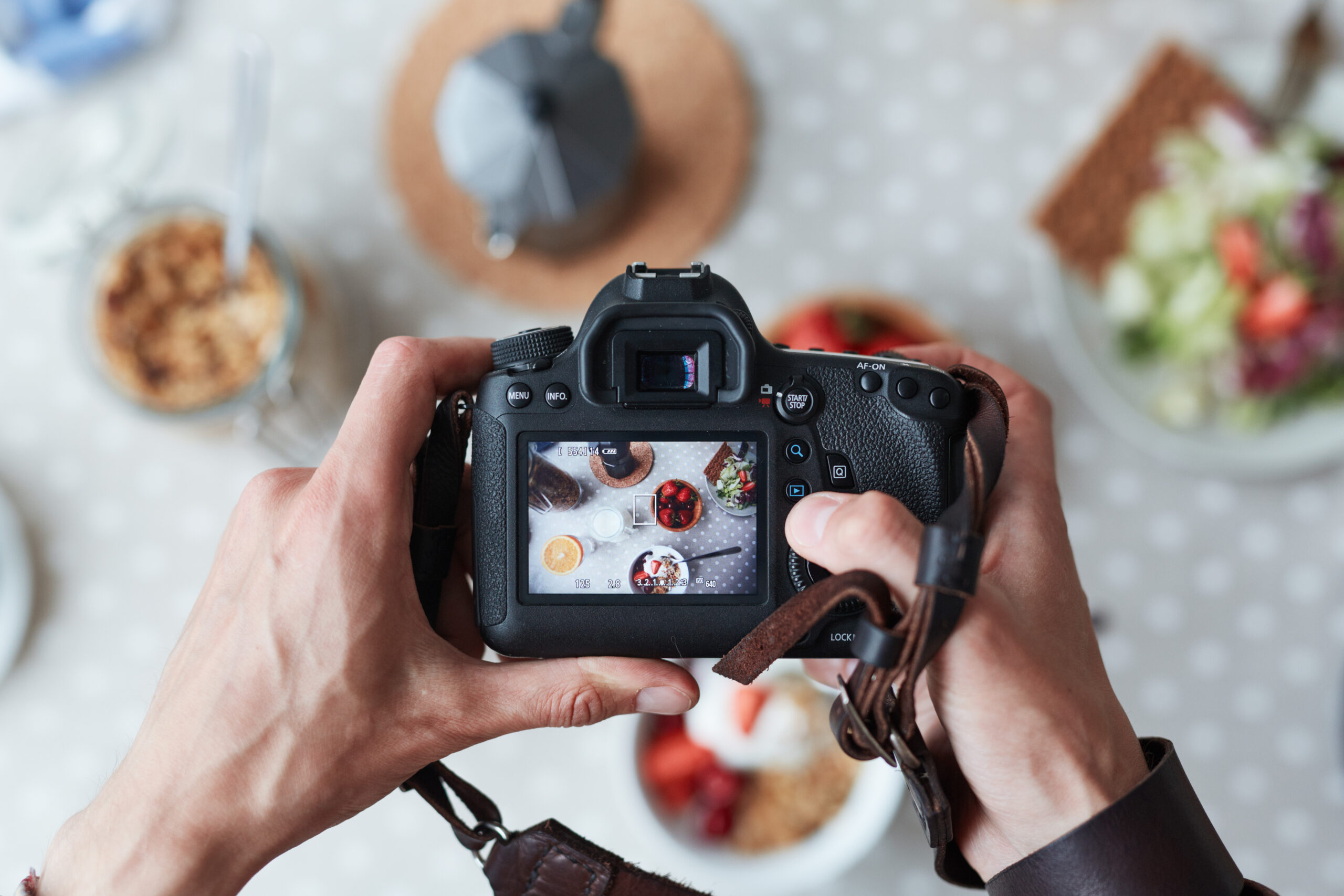
- Overhead shots: Work well for flat dishes such as pizza, salads, charcuterie boards and meals arranged in bowls.
- 45-degree angles: Show the food from a natural dining perspective and work well for plates with several components.
- Eye-level shots: Help capture the height and layers of burgers, stacked pancakes, sandwiches and desserts.
Try more than one angle when photographing a signature dish. A close-up may show the texture of the ingredients, while a wider shot explains the portion size and presentation.
For food photography for restaurant menu pages, consistency matters. Use similar angles, framing and backgrounds for comparable dishes so customers can scan the menu without the images feeling disconnected.
3. Prepare the Dish Before the Photoshoot
Food can lose its fresh appearance quickly. Ice cream melts, fried food softens and sauces settle, so coordinate with the kitchen before starting a photoshoot for food.
Wipe plate edges, remove stray crumbs and arrange garnishes neatly. Make sure the main ingredients face the camera and the portion looks appealing without misrepresenting what customers receive.
Photograph time-sensitive dishes soon after plating. Preparing a shot list in advance also helps the kitchen and photographer work efficiently.
4. Use Simple Props and Backgrounds
Plates, cutlery, napkins and table surfaces can add context, but too many props distract from the food. Choose backgrounds that suit the restaurant’s style and complement the colours of the dish.
For example, a wooden surface may suit a casual brunch restaurant, while a neutral background can work well for a contemporary dining space.
For restaurant photography ideas, use the restaurant’s existing colours, materials and presentation as inspiration. Keep the dish as the main focus.
5. Plan a Restaurant Photoshoot With a Shot List
A planned restaurant photoshoot helps you capture the images needed for different marketing channels in one session. Start by identifying signature dishes, popular meals, drinks, desserts and seasonal specials.
Your shot list can include:
- Individual menu items and close-up details.
- Group shots featuring several dishes.
- Food preparation and plating moments.
- Drinks, desserts and side dishes.
- Restaurant interiors, staff and dining areas.
Capture both horizontal and vertical images when possible. This gives your team more flexibility when creating website banners, social media posts and promotional materials.
6. Restaurant Photography for Menus, Websites and Social Media
Each platform has different image requirements. Menu photos should clearly show the dish, while website images can communicate the restaurant’s atmosphere and dining experience.
For social media, mix close-ups with behind-the-scenes moments, food preparation and table settings. This creates variety without relying on the same type of image for every post.
Use suitable dimensions and compress website images without sacrificing visible quality. Well-prepared images can support your restaurant’s marketing while helping pages load efficiently.
7. Restaurant Interior Photography: Capture the Atmosphere
Restaurant interior photography helps customers understand the space before visiting. Photograph the dining room, seating arrangements, bar, outdoor area and distinctive design details.
Choose a time when the restaurant is clean and organised. Arrange chairs, clear unused tables and use lighting that reflects the actual atmosphere. Wider shots can show the layout, while closer images highlight features such as lighting fixtures, artwork or table settings.
Keep perspective natural and avoid making the space appear significantly larger than it is. Accurate interior images help customers form realistic expectations.
8. Restaurant Photography Ideas for More Engaging Images
A restaurant’s photo collection should show more than finished plates. Different compositions can communicate the menu, preparation process and dining experience.
Try these restaurant photography ideas:
- Signature dish: Highlight the meal customers associate with your restaurant.
- Table spread: Arrange complementary dishes and drinks together.
- Behind the scenes: Capture chefs plating food or preparing ingredients.
- Ingredient close-ups: Show textures, fresh produce and defining details.
- Dining experience: Photograph a prepared table or a server presenting a dish.
Keep each composition simple and make sure the food remains the main subject.
9. Edit Food Photos Without Making Them Look Artificial
Editing helps correct exposure, colour and sharpness, but excessive adjustments can make dishes look unrealistic. Start by correcting white balance, adjusting brightness and cropping the image for its intended use.
Avoid oversaturated colours, exaggerated shine or filters that significantly change the food’s appearance. Keep editing consistent across the menu and website.
Accurate images are particularly important for menu photography because customers should recognise the dish they receive.
10. Restaurant Photography Pricing: What Affects the Cost?
Restaurant photography pricing depends on the number of dishes, shooting time, location, editing requirements and image usage rights. A short session covering a few signature meals will usually involve a different workload from a full shoot covering food, interiors and staff.
Before requesting a quote, confirm:
- The number of dishes and setups included.
- Shooting time and preparation requirements.
- Editing and final image delivery.
- Usage rights for menus, websites and advertising.
- Travel costs and additional fees.
Compare the final deliverables rather than the shooting fee alone. A clear brief helps you budget appropriately and get images that meet your marketing needs.
Should You Hire a Professional Restaurant Photographer?
Smartphone photography can work for everyday social media posts, but a professional shoot can be useful when you need consistent menu images, controlled lighting or a complete visual library.
Enter Productions provides photography services in Toronto and the GTA for businesses looking to create professional images for their marketing. If you are updating your menu, refreshing your website or planning a restaurant photoshoot, contact the team to discuss your requirements and request a quote.
Final Thoughts
Good restaurant photography starts with planning. Use suitable lighting, prepare each dish carefully and choose compositions that reflect your restaurant’s food and atmosphere.
Before your next shoot, list the images you need for your menu, website and social media. Include signature dishes, drinks, interiors and a few preparation shots. A focused plan helps you make better use of the session and build a consistent collection of images for future marketing.
FAQs
How do you photograph food for a restaurant menu?
Use soft lighting, a suitable camera angle and a clean background. Keep presentation consistent and ensure each image accurately represents the dish.
What equipment is needed for restaurant photography?
A smartphone or camera, stable tripod and suitable lighting can work for basic photography. Professional shoots may require additional lenses and lighting equipment.
How often should a restaurant update its photos?
Update photos when the menu changes, new dishes launch, the interior is renovated or existing images no longer reflect the restaurant.
How much does restaurant photography cost?
Costs depend on shoot duration, the number of dishes, editing and usage rights. Request a quote with clearly defined deliverables and additional fees.
Can professional food photos help restaurant marketing?
Yes. Consistent images give restaurants useful content for menus, websites, social media and promotional campaigns while helping customers understand the food and dining experience.